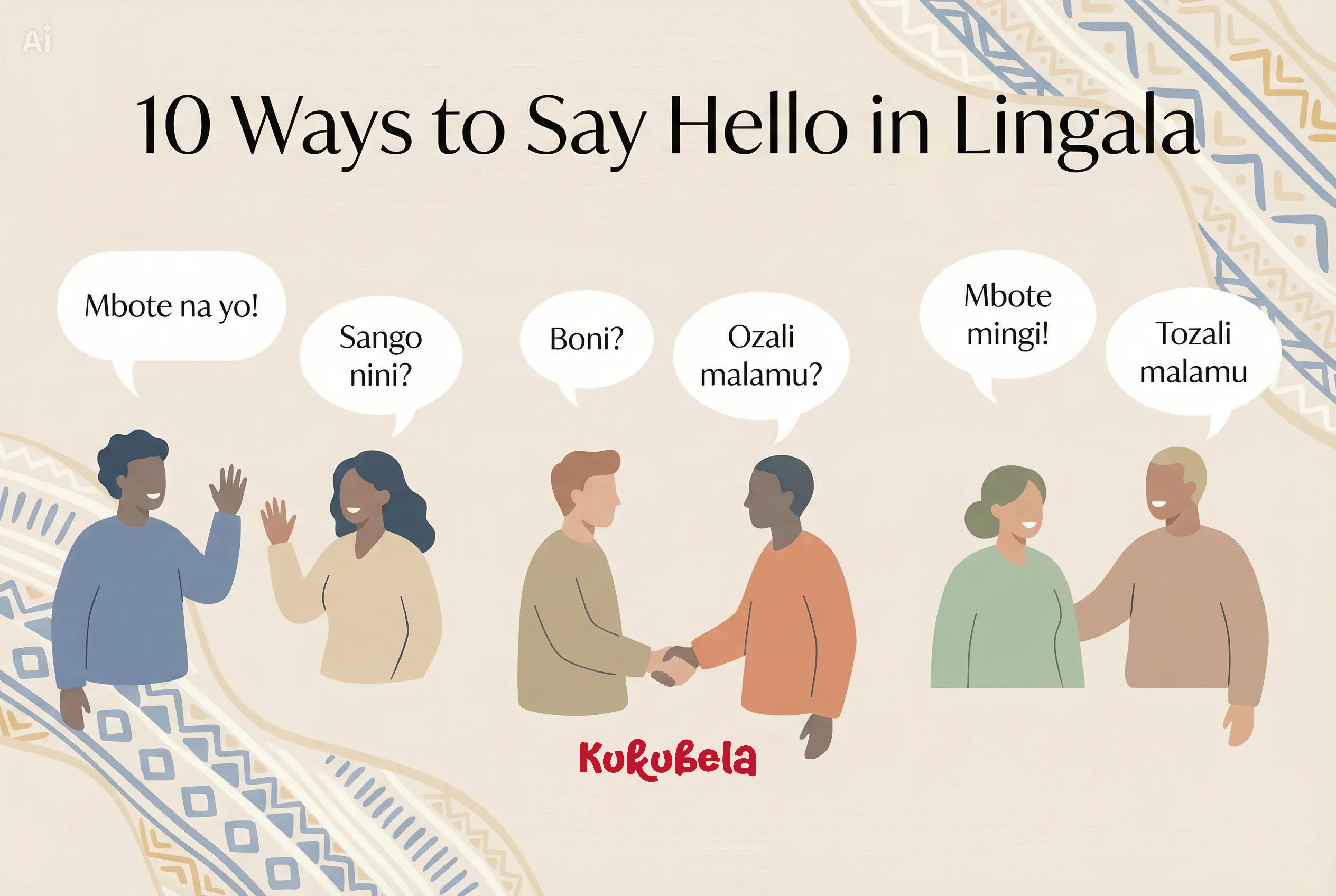
10 Ways to Say Hello in Lingala
Learning how to greet people is one of the first steps in any language. In Lingala, one of the most widely spoken languages in the Democratic Republic of the Congo and also in parts of the Republic of the Congo, greetings are a very important part of communication and culture.
More than just words, greetings in Lingala express respect, closeness, and interest in the other person.
If you're starting to learn Lingala, here are 10 common ways to say “hello” and greet someone.
1. Mboté
Mboté is the most common greeting in Lingala.
It can mean hello, good morning, good afternoon, or good evening, depending on the context.
Example:
Mboté! – Hello!
It is a safe and polite way to greet almost anyone.
2. Mbote na yo
If you want to make the greeting more personal, you can say:
Mbote na yo – Hello to you
It’s a friendly way to greet someone directly.
3. Mbote na bino
If you are speaking to more than one person, use:
Mbote na bino – Hello to you (plural)
This form is commonly used when greeting a group.
4. Boni?
Another common greeting in Lingala is:
Boni?
It literally means “how?”, but in practice it works like “how are you?” or “how’s it going?”.
5. Sango nini?
Sango nini? means “what’s the news?”
It’s similar to asking “what’s new?” or “how are things?”.
6. Ndenge nini?
This expression literally means “how?”, but in everyday use it means:
Ndenge nini? – How are you?
It is a very common greeting among friends.
7. Ozali malamu?
Ozali malamu? literally means:
“Are you well?”
It’s a direct and caring way to ask how someone is doing.
8. Boyei malamu
If you are welcoming someone or meeting a person who has just arrived, you can say:
Boyei malamu – Welcome
It can also be used to check if someone arrived safely, showing care and hospitality.
9. Mbote mingi
Mbote mingi means “many greetings” or “hello with great respect”.
It is a warmer and more respectful way to greet someone.
10. Mbote na bino nyonso
When you want to greet an entire group, you can say:
Mbote na bino nyonso – Hello everyone
It is often used in meetings, classes, or gatherings.
Why learn greetings in Lingala?
In Congolese culture, greeting properly is an important way to show politeness and respect.
Learning these simple expressions can help you:
- start conversations more naturally
- connect better with native speakers
- better understand the local culture
- gain confidence when speaking Lingala
Start learning Lingala with Kukubela
At Kukubela, we believe that learning African languages is also a way to preserve identity, culture, and history.
On our platform, you can learn Lingala, Kikongo, and Kimbundu through structured, practical courses designed for the modern world.
If you want to start speaking Lingala today, explore the courses available on Kukubela and take the first step in your language journey.